Discover the richness of Iranian music on our Persian Khosousi site
گنجینه موسیقی ایرانی را در وبسایت فارسی خصوصی کشف کنید
➜
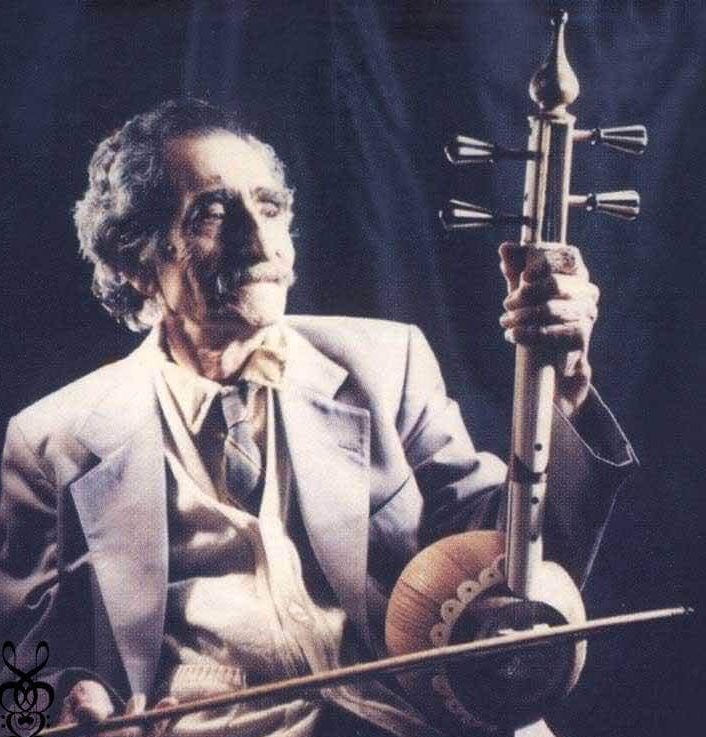
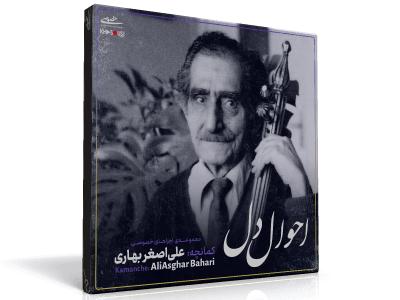
Ali-Asghar Bahari was born in 1284 in the Abbasabad Bazaar area of Tehran. He was originally from the city of Bahar. His father, Naib Mohammad-Taqi Khan, was responsible for his upbringing until the age of 13. After his father went bankrupt, his mother, Gohar Khanum, the daughter of Mirza Ali Khan, a skilled Kamancheh player, was forced to take refuge with her family in her father’s house. It was at this time that he became acquainted with music and became interested in his grandfather’s Kamancheh playing. At his mother’s request, he learned to play the Kamancheh from Mirza Ali Khan for 2 years, and then for 4 years in the school of his three uncles named Reza Khan, Akbar Khan and Hassan Khan, who were among the famous artists of Iran a century ago, he completed his experiences in Kamancheh playing.
Ali-Asghar Bahari learned from his uncles what he needed to learn until at the age of eighteen, he participated with the orchestra of Ebrahim Khan Mansouri in a concert that was held in a hall, and from here, Bahari’s reputation reached the musicians and they accepted him as a good player and aware of playing Iranian melodies. At this time, with the death of his father, the management of the family was entrusted to him, who was the eldest son of the family. After a few years, when the piano replaced the Santur and the violin replaced the Kamancheh, he also put down the Kamancheh and started playing the violin and went to Reza Mahjoubi to complete his learning in Iranian music. If, after graduation, his teacher was so pleased with the result of his work that he returned all the tuition he had paid him up to that time in one lump sum.
After a while, Bahari opened a music class in Mashhad to teach, and for a year he worked with Habib Samaei, a Santur master, and they taught students, and later he came to Tehran and was invited by Master Ruhollah Khaleqi to the music school for education and started working at the Conservatory. These days coincided with the opening of the radio, which also invited him to cooperate. In 1332, after years of being away from Kamancheh, he took up this instrument again with great interest. In a time when this instrument was being forgotten and was often looked down upon, and this instrument was considered special for street musicians. After Asghar Bahari’s performances on the radio, the University of Tehran invited him to teach the students of this university. In 1346, at the invitation of French Radio, he performed in the Dellaville Hall in front of three thousand spectators.
By cooperating with the Center for Preservation and Propagation of Iranian Music, he trained good students, each of whom is now one of the best Kamancheh players in the country. In addition to making percussive pieces such as Pishdaramad and Reng, he had complete mastery of the Iranian music row and the percussions narrated by the predecessors. Asghar Bahari plays an important role in narrating the forgotten and abandoned compositions and melodies of Iranian music. As many of the compositions and melodies that exist now, owe to his memory.
Bahari passed away on Saturday, Khordad 20, 1374 at the age of 90 and was buried in Imamzadeh Taher of Karaj.
The works collected from this artist are on the private site as follows:
Copyright © 2026 Khosousi – Private