Discover the richness of Iranian music on our Persian Khosousi site
گنجینه موسیقی ایرانی را در وبسایت فارسی خصوصی کشف کنید
➜
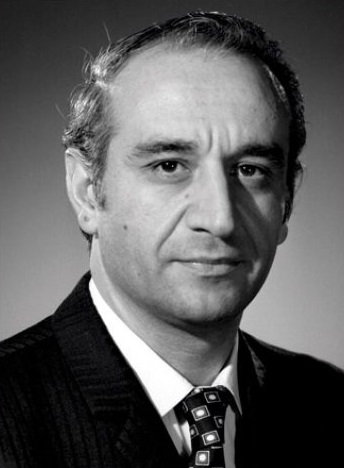
Faramarz Payvar was born on February 10, 1933, in Tehran. His father, Ali Payvar, was a painter and a professor of French language at the University of Tehran, and his grandfather, Mosavar al-Dowleh, was a skilled painter of the Qajar period who was familiar with playing the violin, santur, and setar. Payvar completed his primary and secondary education at Asjadi Elementary School and Darolfonoon High School in Tehran. In 1952, he joined the military service, and a year later, he was employed by the Ministry of Finance.
At the age of 17, he began learning music with Abolhassan Saba, and he learned the musical repertoire within six years. When Faramarz Payvar went to Abolhassan Saba’s class on Zahir al-Islam Street to learn the santur, three years had passed since the death of the last remaining legendary santur player from the previous generation, Habib Samaei. Abolhassan Saba, who himself had learned to play the santur with Ali Akbar Khan Shahi in his youth and with a technique different from the Samaei family, found Habib Samaei’s santur playing method superior to his previous teacher after a while of associating with him; therefore, with great effort, he notated some of his improvisations. Then Abolhassan Saba tried to prevent the decline of the santur playing method close to the artistic and aesthetic rituals of Iranian music by teaching the correct santur playing method to a number of his students. During this time, Faramarz Payvar became one of Saba’s most prominent students and benefited from his teachings until 1957, when Abolhassan Saba passed away.
After the death of Abolhassan Saba, Payvar learned the Darvish Khan repertoire and the Mirza Abdullah repertoire from masters such as Abdullah Davami, Musa Maroufi, and Nourali Khan Boroumand.
Faramarz Payvar started his work in the Ministry of Culture and Arts of that time in 1954, and in 1958 he started teaching santur at the High School of National Music. He was the first santur player who composed on the santur, and his specialty was not only in improvisation. In other words, he was the first composer whose specialty instrument was the santur.
He then learned harmony and composition in the class of Emanuel Melik Aslanian. In 1962, he was sent to England by the Ministry of Culture and Arts to continue his classical studies. He received a degree in English language and literature from the University of Cambridge and during all these years he made great efforts to introduce Iranian music and santur to the academic circles of England, and there are pleasant programs from those years in the BBC radio archive. During these years, in order to introduce authentic Iranian music, he was asked by the University of London and the University of Cambridge to organize conferences in this field accompanied by his instrument. All these conferences were successful and he received awards from these universities.
Payvar’s return from England coincided with the beginning of the Shiraz Arts Festival. Every year, with the group of professors and the group of musicians of culture and art, he performed valuable examples of the works of the great masters of national music as well as his own works in these festivals. In 1968, Payvar was transferred from the Ministry of Finance to the Ministry of Education (Organization for Combating Illiteracy) and retired in 1976.
Mohammadreza Shajarian became acquainted with Faramarz Payvar in 1971 and pursued learning the santur and vocal repertoires with him.
Faramarz Payvar suffered a stroke in 1999 and was unable to continue his artistic activity from that time until his death. Payvar finally died on December 9, 2009, in Shahid Bahonar Hospital in Tehran due to cardiac arrest and respiratory problems.
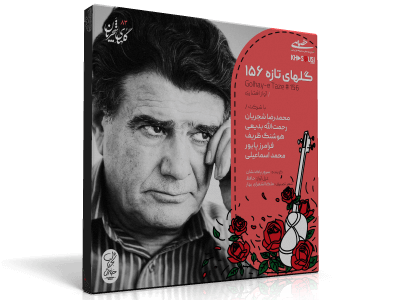
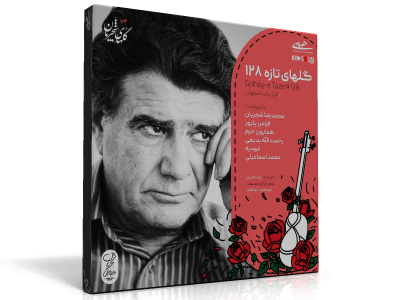
The collected works of this artist are on the private website as follows:
Copyright © 2026 Khosousi – Private