Ten Songs by Iraj Bastami – Bastami’s Selected Songs by Khosousi
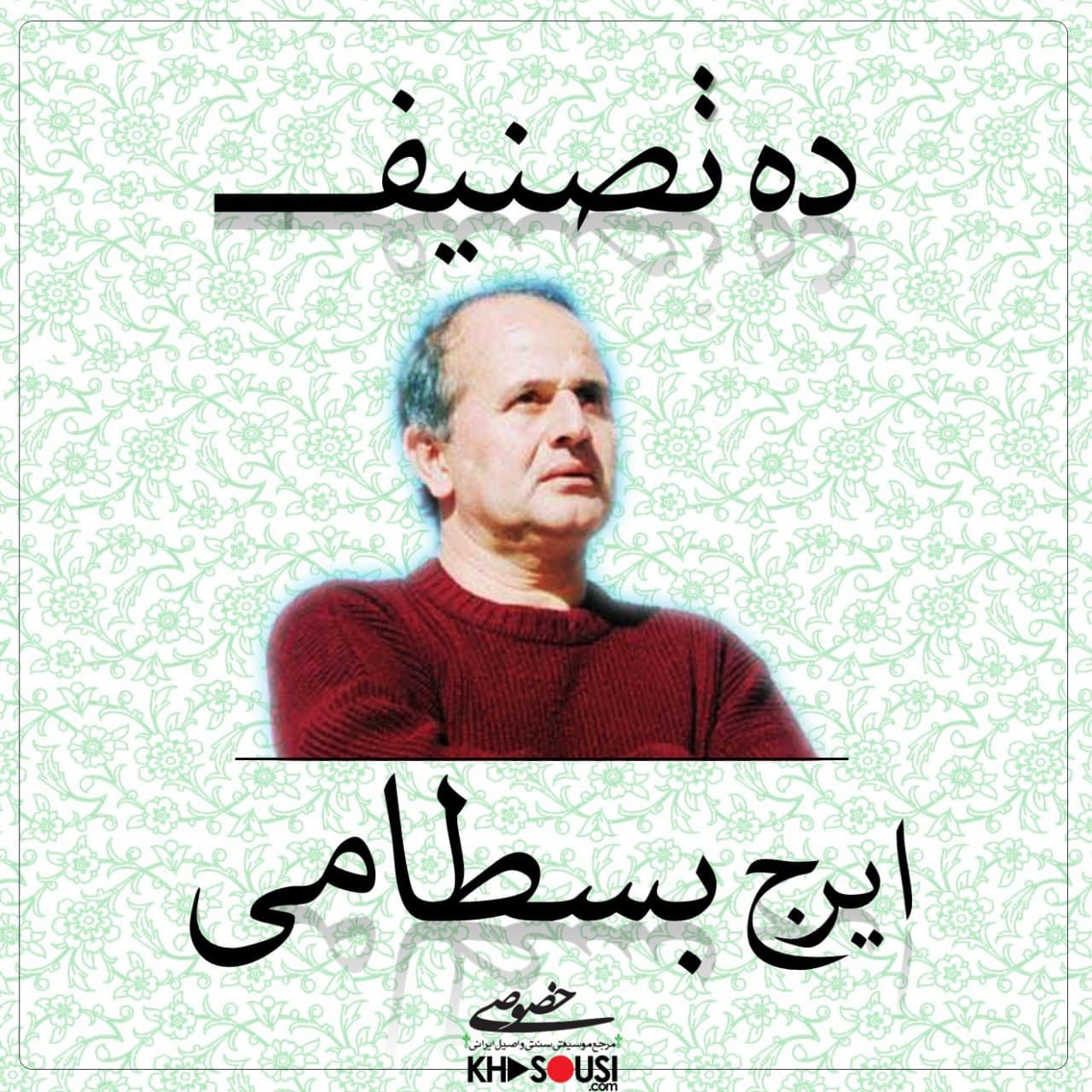
Heshmatollah Bastami (who changed his name to Iraj due to his great interest in Iraj’s voice) was born on November 22, 1957. He was a singer of traditional Iranian music who released his first work with music by Parviz Meshkatian. The song Gol-e Pooneha is Iraj Bastami’s most famous work with music by Hossein Parnia and lyrics by Homa Mirafshar, which gained national fame after his death. Among his other famous works is the song “My Homeland” with music by Parviz Meshkatian and lyrics by Malek-ol-Shoara Bahar, which was declared a national anthem by UNESCO. Iraj Bastami died on December 26, 2003, in the Bam earthquake at the age of 45.
1: ای مجلسیان (Ey Majlesian), Composer: Parviz Meshkatian, Poet: Saadi, Afshari Morakkab Album
2: مست و خراب (Mast o Kharab), Composer: Parviz Meshkatian, Poet: Khajavi Kermani, Ofogh Mehr Album
3: بوی نوروز (Booye Norouz), Composer: Hamid Motebassem, Poet: Saadi, Booye Norouz Album
4: خانه بوی گل گرفت (Khane Booye Gol Gereft), Composer: Hossein Parnia, Poet: Ali Azarshahi, Khane Booye Gol Gereft Album
5: وطن من (Vatan-e Man), Composer: Parviz Meshkatian, Poet: Malek-ol-Shoara Bahar, Vatan-e Man Album
6: موسم گل (Mosem-e Gol), Composer: Musa Maroufi, Arrangement: Mohammad Reza Darvishi, Poet: Vahid Dastgerdi, Mosem-e Gol Album
7: فسانه (Fasaneh), Composer: Keyvan Saket, Poet: Nima Yushij, Fasaneh Album
8: سکوت گویا (Sokoot-e Gooya), Composer: Mohammad Mirnaghibi, Poet: Simin Behbahani, Sokoot Album
9: گلپونهها (Golpooneha), Composer: Hossein Parnia, Poet: Homa Mirafshar, Golpooneha Album
10: ذلیل و بیچاره (Zalil o Bichareh), Composer: Parviz Iranpour, Poet: ?, Fasaneh Album

128kbps – 68.46MB : Direct | Uploadboy
Online Play of Ten Songs by Iraj Bastami:
Download from Telegram Channel
For me who has drunk morning wine, the cloak is forbidden
O assembly members, which way is the tavern?
With a companion like you, in such a place at this time
If I drink wine, is it not forbidden to drink heavenly wine?
Alas, we have cooked in this secret burning
And they have no news of our fire that is خام (Kham – Raw)
🎶🎶🎶🎶🎶🎶
How happy is the drunk and ruined one who has come to the tavern
Free from prayer mat, rosary, and acts of worship
Knowing negation as his affirmation and affirmation as negation
And safe from himself and free from negation and affirmation
He has listened to the invocation of the drunken nightingale
Again, he has come to مناجات (monajat – a kind of prayer) with the wine bird
The melody of the harp of the singer has blocked the path of the عرفان (erfan – gnosis)
Pure wine has come as مداوات (medavat – therapy) for the Sufis
Once, command خواجو (Khaju) to come out of the ایوان (ivan – balcony) and see
Like موسی (Musa – Moses) he has come to میقات (mighat – the appointed time and place) at your alley
🎶🎶🎶🎶🎶🎶
The morning breeze and the scent of Nowruz have arrived
To the liking of friends and the fortune of the victorious
May this year and every year be blessed for you
May this day and every day be auspicious for you
Do good, that you may see fortune from luck
Do not obey the command of the slanderer and the بدآموز (badaamooz – bad teacher)
Like fire that has fallen into the robe, the گلنار (golnar – pomegranate blossom)
Do not put another brazier, do not light a fire
It is a pleasant spring, O flower, where are you?
That you may see the nightingales lamenting and burning
Like fire in the tree, گلنار (golnar – pomegranate blossom) has fallen
Do not put another brazier, do not light a fire
Like نرگس (narges – Narcissus flower), the eye of fortune has awakened from sleep
Sew up the eyes of the envious enemies
🎶🎶🎶🎶🎶🎶
You sat with us for a breath, and the house smelled of flowers
May your house be prosperous, for this ruin smelled of flowers
You saw my scattered speech, I was پریشان خاطر (parishan khater – worried)
You combed your hair, and the comb smelled of flowers
The radiance of the color of your cheek, with the گل افشانی (gol afshani – flower scattering) it had
In the pilgrimage of the heart, the butterfly smelled of flowers
Until your ruby lips kissed the goblet and wine
My imagination’s cup smelled of flowers
Love rained, madness bloomed, and enchantment pitched its tent
Until the desert of madness, the افسانه (afsaneh – legend) smelled of flowers
From the scent of the passionate poetry of the lovers’ fire
The ساقى (saghi – cupbearer), the goblet of wine, and the میخانه (meykhaneh – tavern) smelled of flowers
🎶🎶🎶🎶🎶🎶
O territory of Iran, my dear homeland
O you who are kneaded with your مهر (mehr – affection), my soul and body
Far from you, I have no گل (gol – flower), لاله (laleh – tulip), سرو (sarv – cypress), and سمن (saman – jasmine)
O my باغ (bagh – garden), گل (gol – flower), لاله (laleh – tulip), سرو (sarv – cypress), and سمن (saman – jasmine)
As long as your side is full of enemy soldiers
My دل (del – heart) will never be empty of محن (mehan – sorrow), محن (mehan – sorrow)
Alas and alas that you became so without me
That you do not have my کفن (kafan – shroud) woven by yourself
Today I say with much sorrow
Alas and alas, my homeland, my homeland
🎶🎶🎶🎶🎶🎶
It has been a day or two in زمانه (zamaneh – world)
O you who bring peace to the دل (del – heart), a افسانه (afsaneh – legend) in the world
O you from whom goodness remains as a نشانه (neshaneh – sign)
Do not torment the خاطر (khater – minds) of lovers
It is not good for the beloved to torment
If the شمع (sham – candle) burns the پروانه (parvaneh – moth) with its flame
When it becomes day, the شمع (sham – candle) will be gone and you will not see any نشانه (neshaneh – sign) of شب (shab – night)
You hunt the captive bird
You throw stones at the broken
You kill the wounded یار (yar – beloved) with the تیغ ستم (tigh-e setam – sword of oppression)
The wounded دلان (delan – hearts) are all covered in خون (khoon – blood)
You خویش (khish – self) and سو (soo – direction) and بیگانه (biganeh – stranger) سازی (sazi – making)
It is not your آیین (ayeen – custom) to عاشق نوازی (ashegh navazi – caressing lovers)
The تیر عشقت (tire eshghet – arrow of your love) that has نشسته (neshasteh – set) in our سینه (sineh – chest)
Have mercy on the عاشق (ashegh – lover)’s دل (del – heart) that is زار (zar – lamenting) and خسته (khasteh – tired)
🎶🎶🎶🎶🎶🎶
O افسانه (afsaneh – legend), افسانه (afsaneh – legend), افسانه (afsaneh – legend)
I am the نشانه (neshaneh – target) for your خدنگ (khadang – arrow)
O علاج (elaj – cure), O دل (del – heart), O دای درد (daye dard – nurse of pain)
Also the ره (rah – companion) of شبانه (shabaneh – nightly) گریه (geryeh – crying)
In what are you involved with me, the سوخته (sookhteh – burned)
O افسانه (afsaneh – legend), the خس (khas – dry twigs) are those
Who have فرو بسته (foro basteh – blocked) the راه (rah – way) to the گلزار (golzar – rose garden)
The خس (khas – dry twigs) does not نالد (nalad – lament) a hundred years of طوفان (toofan – storm)
The گل (gol – flower) is بیمار (bimar – sick) from a single تار (tar – strand) of باد (bad – wind)
Do not hide the سخن ها (sokhan ha – words) you have
🎶🎶🎶🎶🎶🎶
If silence is a sign of رضایت (rezayat – satisfaction), how can I not believe your گویای (gooya – eloquent) silence?
If نگاه (negah – look) is a پیام (payam – message) of familiarity, why shouldn’t I تمنا (tamanna – desire) your گیرای (giray – captivating) نگاه (negah – look)?
The خطوط (khotoot – lines) of your مژگان (mozhgan – eyelashes) نقش (naghsh – imprinted) وفا (vafa – loyalty) on my دل (del – heart)
The غروب (ghoroob – sunset) of your چشمان (cheshman – eyes) gave the رنگ (rang – color) of سحر (sahar – dawn) to my شب (shab – night)
In your مستی (masti – intoxication) چشمان (cheshman – eyes), I see the اثر (asar – effect) of عشق (eshgh – love) that I بخش (bakhsh – give)
In the جلوه (jelveh – splendor) of فروردین (farvardin – spring), I see it more شگفتهتر (shegoftetar – blooming)
Your چشمانت (cheshmanat – your eyes) were a روشن (roshan – bright) آیینه (ayeneh – mirror) like the دل (del – heart) of اهل صفا (ahl-e safa – people of purity)
A تصویری (tasviri – image) of سحر (sahar – dawn)’s سیمای (simay – face) laughs in this آیینه ها (ayeneh ha – mirrors)
My نگه (negah – gaze) towards your نگهت (negahet – your gaze) like a کبوتر (kabootar – dove) brought the نامه (nameh – letter) of دل (del – heart)
It زند پر (zanad par – flutters) in your هوایت (havayat – air) so that perhaps one شب (shab – night) it will be آگه (ageh – aware) of the هنگامه (hangameh – tumult) of دل (del – heart)
I گمان برم (goman baram – assume) that your خاطر (khater – mind) پسند (pesand – approves) the رضایت (rezayat – satisfaction) of عاشقان (asheghan – lovers)
Your دل (del – heart) پسند (pesand – approves) whatever my خاطر (khater – mind) طلب (talab – asks) for
🎶🎶🎶🎶🎶🎶
Wild گل پونه ها (gol pooneh ha – pennyroyal) of the دشت امیدم (dasht-e omidam – plain of my hope), it is سحر (sahar – dawn) time
The خاموشی (khamooshi – silence) of شب (shab – night) is gone and another فردایی (fardayi – tomorrow) has become
I مانده ام تنها (mandeh am tanha – remained alone) میان (miyan – among) the سیل غمها (seyl-e ghamha – flood of sorrows)
گل پونه ها (gol pooneh ha – pennyroyal), نا مهربانی (na mehrabani – unkindness) burned me
گل پونه ها (gol pooneh ha – pennyroyal), بی همزبانی (bi hamzabani – lack of companionship) burned me
I می خواهم (mi khaham – want) now until the سحر گاهان (sahar gahan – dawns) to بنالم (benalam – lament)
I am افسرده (afsordeh – depressed), دیوانه ام (divaneh am – I am mad), آزرده جانم (azordeh janam – my soul is hurt)
Wild گل پونه ها (gol pooneh ha – pennyroyal) of the دشت امیدم (dasht-e omidam – plain of my hope), it is سحر (sahar – dawn) time
The خاموشی (khamooshi – silence) of شب (shab – night) is gone and another فردایی (fardayi – tomorrow) has become
🎶🎶🎶🎶🎶🎶
There is no one more ذلیل (zalil – humiliated) and بیچاره (bichareh – helpless) than me in your روی (rooy – face)
My پشت (posht – back) is خمیده شد (khamideh shod – bent) from غم (gham – sorrow) like your ابروی (abrooy – eyebrow)
Every کس (kas – one) has گرفته (gerefteh – taken) his دل (del – heart)’s کام (kaam – desire) from your لب لعل (lab-e la’l – ruby lip)
My کامم (kaamam – my desire) was not روا (rava – granted) from you, وای (vay – woe), وای (vay – woe) بر دل من (bar del-e man – to my heart)
At the مجلس (majles – gathering) of بیگانگان (biganegan – strangers) you نوشی (nooshi – drink) pure باده (badeh – wine)
Wherever you می روی (mi ravi – go), with every کس (kas – one) مست (mast – drunk) and خراب (kharab – ruined)
You خبر نداری (khabar nadari – have no news) of your حال (hal – state) with the people of چه سان (che san – how)
It کند بس آزاروستم (konad bas azar-o setam – causes much torment and oppression), وای (vay – woe), وای (vay – woe) بر دل من (bar del-e man – to my heart)
No one like من (man – me) will کی (key – when) داند (danad – know) your قدر (ghadr – value), صنما (sanama – idol)
In the راه عشق تو (rah-e eshgh-e to – path of your love) I give جان (jan – soul) and دل (del – heart) به فدا (be fada – as sacrifice)
بیا (biya – come) بنه (baneh – put) the رسم ستم (rasm-e setam – custom of oppression) به یک سو (be yek soo – aside), دلبرمن (delbar-e man – my beloved)
You will شوی پشیمان (shavi pashiman – become regretful) به خدا (be khoda – by God), وای (vay – woe), وای (vay – woe) بر دل من (bar del-e man – to my heart)
